BEGINNING VIOLIN OR FIDDLE

HOW TO PLAY FIDDLE OR VIOLIN WITH TABLATURES (without teacher)
(by Marc Capuano)


About Fiddle Hardware ?
A student violin can still be had for a very reasonnable price on internet (shops online, ebay auctions,...). Some violins (Stradivarius, Guarnerius, Amati,..)cost a small fortune but they are not for beginners. You can also choose an electric violin, it isn't a bad choice for beginners and neighbours.:-))


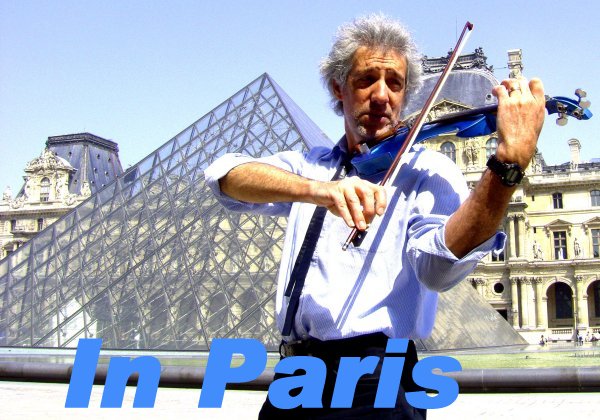
Electric violin Marc Capuano Design
A new french and amazing electric violin (Marc Capuano signature)

There are differents sizes of violin : 4/4 (also called Full size), 3/4, 1/2, 1/4, 1/8, 1/10, 1/16.
To know what size violin you need, you must to know the length between your neck and the wrist of your left-hand (when your hand is fully extended and raised perpendicular to your body).

Arm Length (neck to wrist)
23 inches
22 inches
20 inches
18.5 inches
16.5 inches
15 inches
14 inches
Violin Size 4/4
Body : 14 inches
355 mm
Length : 23 inches
584 mm
3/4
Body : 13 inches
330 mm
Length : 21.75 inches
552 mm
1/2
Body : 12.5 inches
317 mm
Length : 20.5 inches
520 mm
1/4
Body : 11.5 inches
292 mm
Length : 18.75 inches
476 mm
1/8
Body : 10.25 inches
260 mm
Length : 17.25 inches
438 mm
1/10
Body : 9.25 inches
235 mm
Length : 16 inches
406 mm
1/16
Body : 8.25 inches
355 mm
Length : 14.5 inches
368 mm
Age 12 and older 10-11 years 8-9 years 6-7 years 5-6 years 4-5 years 3 and younger


Tablatures - how to read a fiddle tab ?
Tablature is one of the oldest forms of written music...it is a visual approach to reading music that gives you an exact position of finger placement on your instrument's fingerboard. There are many advantages of tablature. Standard notation requires a roman numeral positioning to denote where to place your fingers. Tablature is more direct.

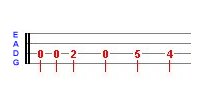
FIDDLE, VIOLIN TABLATURE

The letters to the left of each line represent the name of the string. In this fiddle tab representation,
the top line represents the "E" string...the next below the "E" would be the "A" string...the next below
the "A" would be the "D" string...and the next below the "D" string would be the "G" string. So visually,
you're looking at the fiddle strings, as represented by these lines, upside down.
A great starting place would be to place your hand at the first position.
 

First finger: index for position 1 and 2 on the tablature

Second finger: middle position 3 and 4on the tablature

Third finger: ring finger position 5 and 6 on the tablature

Fourth finger: little finger position 7 and 8 on the tablature


See below the beginning of happy birthday's song tablature

HAPPY BIRTHDAY


"WARM UP" PHYSICAL EXERCISES

In the begining, there is often the same enemy : the tension in your body.
Let's begin with exercises away from the fiddle
The two most important areas to stretch before playing are the neck and shoulders. These are the parts of the human body which commonly hold a great deal of tension. Begin by doing neck rotations and stretches to the sides. Be sure to stretch very slowly.

Left hand exercises

Do windmills with both arms but in same direction and then in opposite direction, simultaneously, first slowly.

Breathing exercises:
Count : one (breathe in) - two (breathe in) - three (breathe in)
- four (block)
- five (breathe out slowly)
- six (breathe out slowly)
- seven (breathe out slowly)
- height (breathe out - nothing remain)

Scales and arpeggios : i would recommend that you choose specific exercises that relate to the musical works which you are trying to play.

Lessons on video

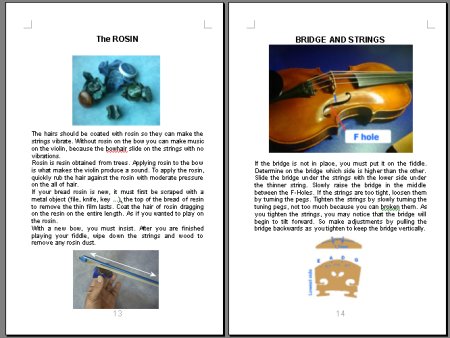
Tighten your bow by turning the tension screw.  The separation between the middle bow stick and hair should be about 10mm.  Put a small amount of rosin.  Take the rosin in your left hand, place the bow hairs flat on the rosin and slowly move the bow back and forth on the rosin, 5 or 6 times.

First of all, your violin should be tuned for it, please, use an electronic tuner.


See Close up on "Dirk eyes" gipsy violin tune
tab and score on book
Fiddle tunes book


See Close up on "Ave Maria" Gounod
violin tab in free txt file


video Waltz # 2 (Chostakovitch)
Violin tab in
free txt file

you need to see something

Left Hand : The elbow must be under the fiddle.  Keep the wrist gently rounded.  the wrist isn't against the fiddle neck.  The thumb must be opposite the first or second finger. 


Famous J. Strauss Waltz (kaiser waltz) in midi : Free Tablature/score in pdf
To view PDF files, you must have Adobe Acrobat Reader


You should install and use the free " Adobe Acrobat Reader " software to read and print the tablature music sheets which are all in the format PDF (Portable Document Format).

Order the book with famous tablatures for fiddle
Voir le contenu du livre VIOLON FOLK
Easy and Famous tunes for Fiddle


blues Blues in G Improvisation blues mp3


holding the bow correctly!
Some fiddlers hold the bow with the thumb between the frog and the stick, with the fingers played on the top of the stick and some other fiddlers place their thumbs beneath the frog. The hair of the bow shold be tightened so that it doesn't touche the stick when you are playing.The hair must also kept sticky with rosin, so that it catches on the strings. If the bow is new without rosin on the hair you'll hear no sound. It's very useful to practice in front of a mirror. Grab the bow and try playing some easy notes. Place the bow on the string at the middle point between the bridge and the fingerboard.  Push the bow in an upstroke and pull the bow in a downstroke, try to use the entire length of the hair. Draw the bow in a straight line so the bow remains parallel to the bridge. Play on open strings and full length slow bow. As you draw the bow down, make sure that the bow stays in a straight line between the bridge and fingerboard. Pay attention to the changing of direction, the bow must remaining in the same line. The transition must be smooth and not bumpy or gritty sounding. Keep your lebow and your wrist relaxed. Practice these long bows on all open strings. Play softly and slowly, as this requires maximum control.

Scales with scores and violin tab

Technical training : Vibrato
Vibrato is a modulation of pitch.
Begin with the 3rd finger on a string.
Use a metronome. Set it on a slow tempo (80).

Rock the finger SLOWLY back and forth. You will get between a quarter-tone and a half-tone. It is essential that this "rocking" be rhythmically correct. The rhythm is your control element.
This will NOT sound pretty. Be patient. It comes with practice. Keep a slow speed then increase slowly.
See basic movements and listen

Glissando or slide
The slide or glissando is the most favorite ornaments, it's an easy manoeuver that add much expression. When a glissando is performed on a fiddle, each semitone would be sounded as the finger is either slid up or down the length of a string. Sliding on the string from one note to the next note using the same finger. Look at violin glissandos on Dirk eyes tune


Playing on two adjacent strings - The Double stops

When jamming with a band, sometimes the fiddle plays back up chords. Playing chords on fiddle requires what we usualy call double-stops, listen these are chords with only two notes...for instance, a G chord can be played on fiddle by drawing the bow over the G and D strings open. These double stops only come in three pictures, low. med and hi, for the top two, middle two or bottom two strings together. So you can use notation of L/M/H and put numbers like 0,1,2,3,4 for notes positions, like in tablature system. That way a D chord can be noted as a "M00".

See, the 2nd column below. The next column is the notes that make the major chord. The numbers represent the notes positions on the fingerboard, and the order is for all 4 strings, top down. Let me explain the finger position numbers. There are 0, 1, 2, 3, 4 and 5. 0 is for an open string, 1 is for where you play a "F" on the "E" string, 2 is for a "B" on the "A" and 3 is for "F" on an "D". So, to play a D chord, you can play a L20, (that means a A and a D), or a M00 (a D and a A), or a H02 (a A and a F#). Its all your choice of what two strings to pick.

CHORDS Tab Position Notes in chord
D L20, M00, H02
L24, M45, H52
D, A, F #
G L00, M02, H23
L45, M55, H53
G, B, D
A L62, M20, H00
L22, M24, H40
H45
A, C #, E
C L52, M23, H30 C, E, G
F L53, M33, H35
L23, H31
F, C, A
E L12, M22, H24
L42
E, B, Ab
B L40, M02, H22 B, D, F #
Bb L33, M34, H41 Bb, Db, F


Take care about your fiddle and your bow
  After playing the fiddle, clean it with a soft cloth to remove rosin build-up on the strings.  Loosen the hair on your bow.  Do not store your violin in hot or cold location.


Violin or fiddle strings
How to identify the string model with the colors of its end wrapping


Manufacture

TAILPIECE END String color

CORELLI PURPLE-BLACK
DADDARIO HELICORE BLUE-YELLOW
DADDARIO PRELUDE or RED/LABEL or SPIROCORE RED
DADDARIO PROARTE RED-BLUE
DADDARIO QUANTUM or PIRASTRO VIOLINO BLUE
HUAYIN BROWN
PIRASTRO CHROMECORE DARK-GREEN
PIRASTRO EUDOXA GRAY-PURPLE
PIRASTRO FLEXOCORE YELLOW--MAROON 
PIRASTRO GOLD   LABEL YELLOW
PIRASTRO OBLIGATO RED--BLACK
PIRASTRO PIRANITO GRAY
PIRASTRO PIRRAZI GREEN
PIRASTRO SYNOXA PINK--WHITE
PIRASTRO TONICA RED--WHITE
SUPER SENSITIVE    OCTAVA BLUE--BLACK
THOMASTIC DOMINANT or INFELD-BLUE or INFELD-RED PURPLE


You can buy a set or only one string in this shop on line


FIDDLE METHOD Double stops book Fiddle tunes book
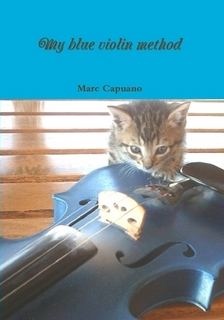
My fiddle method on cdrom

Marc capuano

Major and minor chords
+Circle of fifths

Marc Capuano

Easy and Famous Fiddle tunes

Marc Capuano

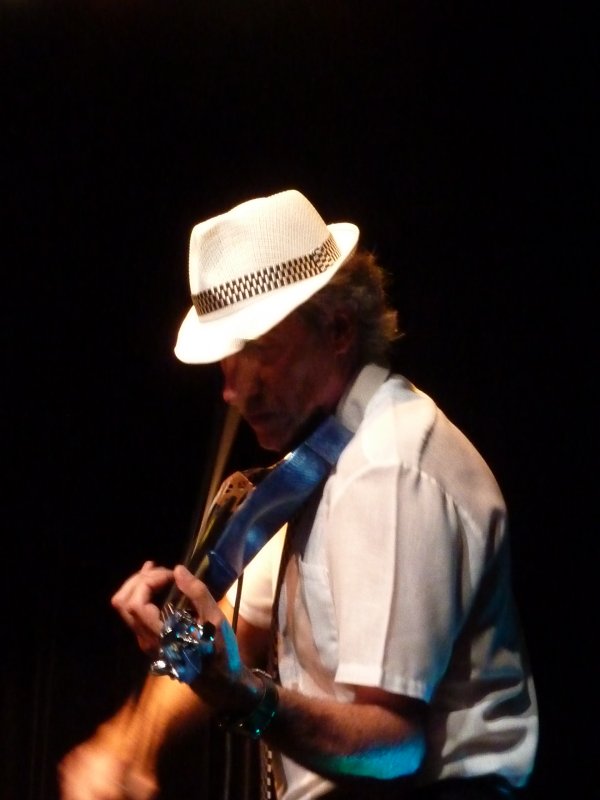
Marc Capuano with his blue violin
Marc Capuano on national french TVMarc Capuano in a Venice CarnavalMarc Capuano fiddling in the streetMarc Capuano in Paris - Moulin rouge

Page d'accueil